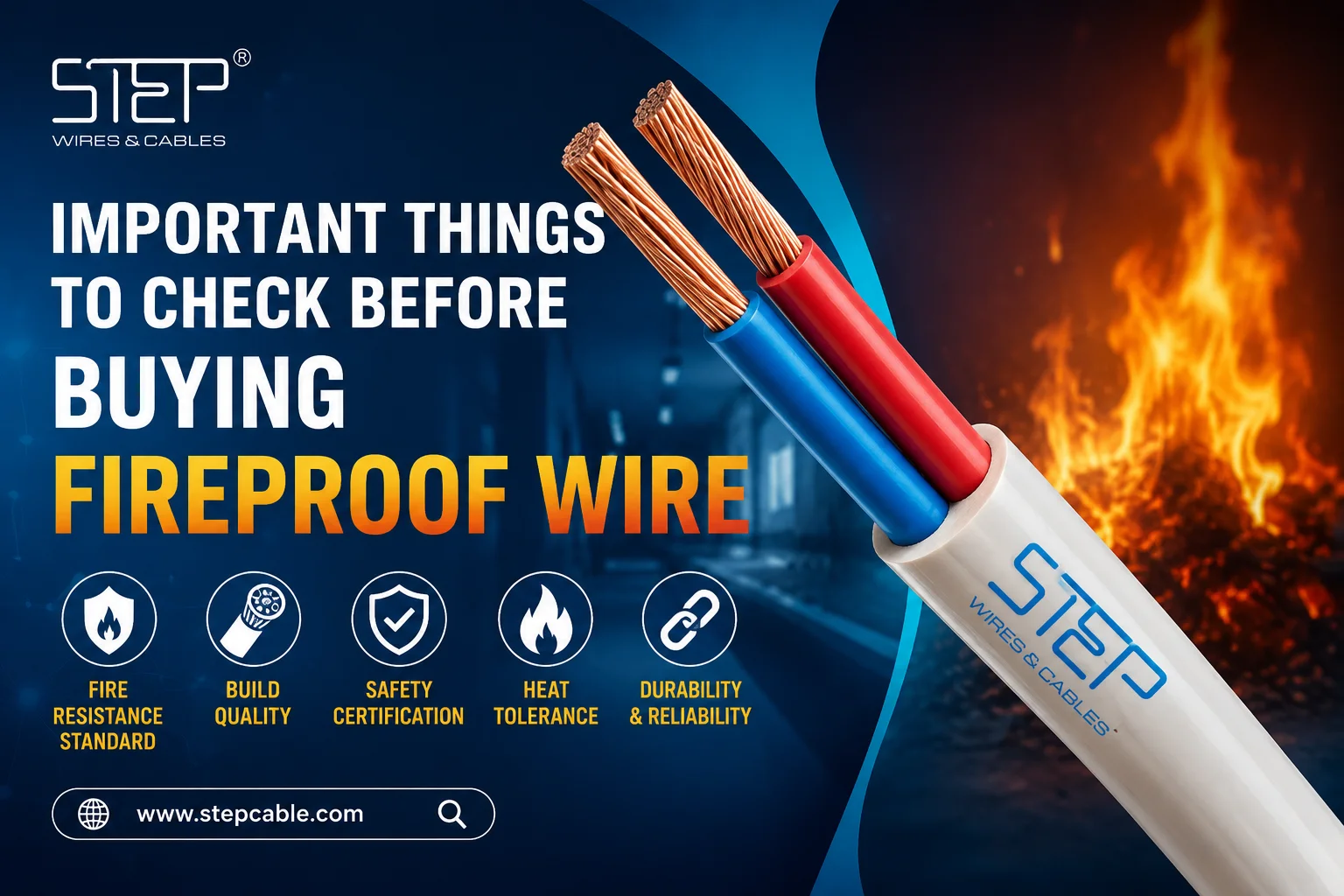
Poor quality wiring in any home, office, factory, hospital, or commercial complex increases the chance of short-circuiting, overheating, and/or fire. For this reason, many property owners, general contractors, and electricians are selecting fire-resistant wire as it provides a much safer electrical installation. In any building, the quality of wiring has a strong impact on electrical safety. When choosing the fire proof wire manufacturers, here are the important things to keep in mind for the buyers.
1. Check Fire Resistant Wires
In earlier forms of cables, the dielectric strength of the insulating material was the only property that was crucial. But over time, the fire-resistant property was introduced in the development of cables for these reasons:
- Fire spread through the cables quickly.
- Gas released from the burning of cables was toxic.
- Smoke release was dense, and it interrupted the emergency response.
FR, FRLS, And Halogen Free Grades
These are the popular choices provided by the fire proof wire manufacturers. FR means flame-retardant grade, which slows the spread of flame during electrical fires. FRLS is an additional feature of Low Smoke with Flame Retardancy, which means the smoke released during combustion is reduced. The HFFR grade is a halogen-free flame-retardant without the presence of halogen, which is toxic and contributes to dense smoke.
2. Conductor Material
Conductor material carries the current in the cable. In high-quality fireproof cables, electrolytic grade annealed copper is used because of its high conductivity and low power loss. The configuration of the wire design also matters. For example, flexible strands are easy to install, and there is lower power loss in them.
3. Current Carrying Capacity
The current carrying capacity of the wire is the measure of the current it can carry without overheating. The size of the wire is directly proportional to the current capacity. Thicker wires are used in air conditioners and heaters, while thinner wires are used in lighting.
4. Heat and Temperature Resistance
At high temperatures, insulation loses its dielectric strength. A good cable should be able to withstand the surrounding temperature without losing its strength. Premium wires use heat resistant PVC or XLPE insulation.
5. Choose a Trusted Manufacturer
The credibility of the fire proof wire manufacturers is evaluated by the standards they comply with and the variety they provide. They must have been recognized by the BIS and electrical safety regulations. Having these certifications means the manufacturer follows strict quality management practices from material sourcing to final inspections.
Conclusion
Fireproof electrical wires are not an additional feature but an important safety inclusion in modern cables. Even the low-voltage home appliances are being made with either FR, FRLS or HFFR insulation. When the buyers look for fire proof wire manufacturers, they must check out the compatibility of wires, current capacity, size, type of fire safety, and core technical aspects. Our team at Step Cables help the clients in buying the suitable cables for their project.